Cambodia’s agricultural sector is undergoing a powerful transformation. Once known primarily for raw agricultural exports, the country is now steadily positioning itself as a competitive player in the global value-added food market.
From tropical fruits and rice to herbs and natural products, Cambodia is building a modern supply chain that connects smallholder farms to international consumers—delivering both quality and reliability.
A Land Built for Agriculture
Cambodia has a natural advantage when it comes to farming. With fertile river plains, nutrient-rich soils, and a tropical climate, the country is ideally suited for growing a wide range of agricultural products. Key crops include:
- Mangoes
- Bananas
- Pineapples
- Dragon fruit
- Citrus fruits
- Rice and grains
- Herbal and medicinal plants
These conditions allow farmers to produce fresh, flavorful, and naturally grown produce that meets growing international demand.
Strengthening the Agricultural Supply Chain
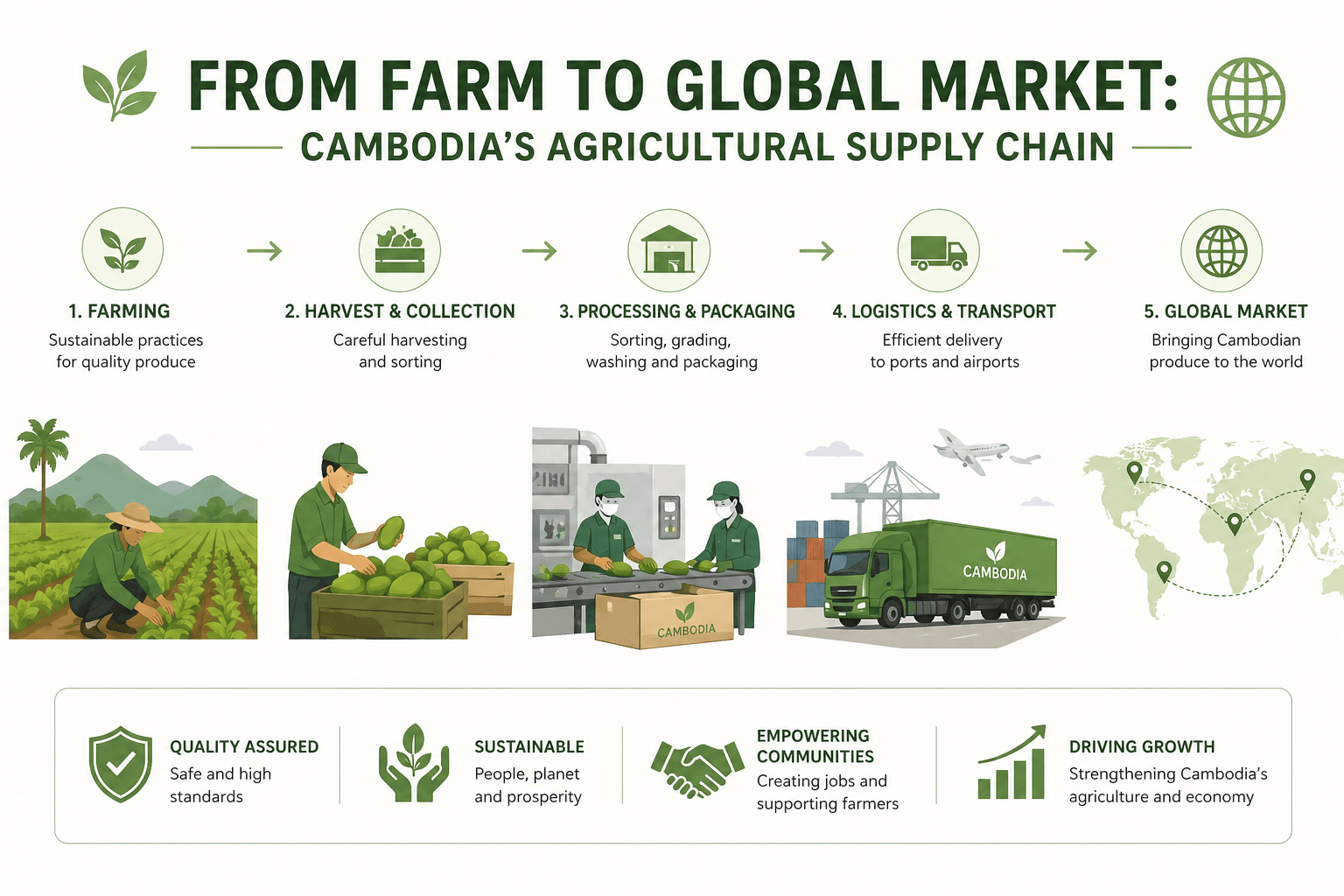
The transformation of Cambodia’s agriculture is not only happening at the farm level—it is happening across the entire supply chain. A modern agricultural supply chain typically includes:
- Farmer production – cultivation and harvesting
- Collection and aggregation – sourcing from multiple farms
- Processing and value addition – drying, packaging, or transforming raw products
- Quality control and certification – meeting international standards
- Export and distribution – delivering to global markets
This integrated system helps ensure consistency, traceability, and quality from farm to final consumer.
The Rise of Value-Added Agricultural Products
One of the most important shifts in Cambodia’s agriculture is the move toward value-added processing. Instead of exporting only raw produce, more products are now being transformed into:
- Dried fruits
- Fruit powders
- Juices and concentrates
- Herbal teas
- Natural snacks
- Organic food ingredients
This approach significantly increases product value while extending shelf life and improving export potential. It also allows Cambodia to compete in higher-margin international markets.
Meeting Global Standards
To succeed in international trade, agricultural products must meet strict safety and quality requirements. More Cambodian producers are now adopting globally recognized standards such as:
- HACCP (food safety management)
- GMP (good manufacturing practices)
- Organic certifications
- Halal and Kosher certifications
These standards build trust with international buyers and ensure that Cambodian products meet global expectations for hygiene, safety, and consistency.
Empowering Local Farmers
At the heart of Cambodia’s agricultural development are smallholder farmers. Improved supply chains are creating better opportunities for rural communities by:
- Providing more stable market access
- Reducing dependency on middlemen
- Increasing income through value-added production
- Encouraging modern farming techniques
- Supporting long-term sustainability
The Future of Cambodian Agriculture
The future of Cambodia’s agricultural sector lies in transformation—from raw commodity exporter to value-added agri-food producer. Key trends shaping this future include:
- Increased investment in food processing
- Expansion of cold chain and logistics systems
- Greater focus on branding and product differentiation
- Adoption of digital agriculture and traceability tools
- Stronger integration into global supply networks
Final Thoughts: Cambodia’s journey from farm to global market is well underway. With strong natural resources, a growing focus on quality, and an evolving supply chain ecosystem, the country is building a solid foundation for long-term agricultural success.
Need a dependable supply chain partner?
Experience seamless agricultural sourcing from Cambodia to your port.